Daft and Direct. is reader-supported. When you buy through links on our site, we may earn an affiliate commission at no extra cost to you. As an Amazon Associate we earn from qualifying purchases.

Every great band comes from a scene, even one as famously private as Daft Punk. In 1990s Paris, a small circle of producers, DJs and label owners were building something that would soon get a name: French touch. The sound took the filtered disco records of the 1970s, the drum machines of Chicago house and a very French sense of style, and turned them into global hits.
Understanding that scene makes Daft Punk’s records make more sense, and it points to a shelf of great vinyl beyond the duo’s own catalog. Here is a short guide to the people, labels and records that matter.
Key takeaways
- French touch was a loose 1990s Paris scene built on filtered disco samples, house rhythms and pop instincts.
- Daft Punk’s own labels, Roulé and Crydamoure, were among its engines, and Stardust’s ‘Music Sounds Better With You’ became its anthem.
- Cassius, Motorbass, Étienne de Crécy and Air pushed the sound in very different directions.
- Ed Banger and Justice carried the French touch spirit into a louder, rock-leaning second wave in the 2000s.
Our top picks
- 1
Where it starts
Daft Punk – Homework (2LP)The album that made the world pay attention to Paris dance music in 1997.
Read our review · Check price → - 2
The downtempo side
Air – Moon Safari (vinyl)Air’s 1998 debut, a dreamy, analog-synth counterpoint to the club records, with over 2,000 ratings averaging 4.8.
Check price → - 3
The second wave
Justice – Cross (2LP)Justice’s 2007 Ed Banger debut, the distorted, maximal sound of Paris a decade after Homework.
Check price → - 4
For completists
Cassius – 1999 (3LP)The debut of Philippe Zdar and Boombass, reissued by Because Music. Fewer ratings, but a core French touch album.
Check price →
From Darlin’ to Daft Punk
Thomas Bangalter and Guy-Manuel de Homem-Christo met as teenagers at the Lycée Carnot in Paris. Their first band, Darlin’, was a guitar group with Laurent Brancowitz, who later joined Phoenix. A dismissive review in the British weekly Melody Maker described their music as “daft punky thrash,” and the pair kept the insult as a name.
They soon traded guitars for drum machines and samplers. Their first single, “The New Wave,” came out on Glasgow’s Soma Records in 1994, followed by “Da Funk” in 1995. When Homework arrived in 1997, it showed that a Paris bedroom studio could take on Chicago and Detroit at their own game. Our feature on the history of Homework covers that period in depth.
There was also a family connection to pop. Bangalter’s father, Daniel Vangarde, was a songwriter and producer behind French disco hits of the late 1970s, including songs for Ottawan and the Gibson Brothers. Disco was never an ironic reference for this generation; it was the music they grew up with.
The filter-disco sound
The defining production trick of French house is the filter. Producers looped a few bars of an old disco or funk record, then swept a filter across it, so the sound seems to open and close, breathing in and out over a pounding four-to-the-floor kick. The effect is hypnotic on a club system and surprisingly emotional at home.
That approach suited the tools of the time: affordable samplers, drum machines and effects units. It is also why so many French touch records feel both retro and futuristic. They are built from the past and arranged like machines. Our look at Daft Punk’s favorite music gear goes deeper into the hardware.
The labels: Roulé, Crydamoure and friends
Both members of Daft Punk ran their own side labels. Bangalter’s Roulé released his solo work and a string of filter-house singles, and Homem-Christo co-founded Crydamoure, which specialized in a heavier, more sample-heavy disco house.
Roulé also released the scene’s defining single. In 1998, Bangalter teamed up with producer Alan Braxe and singer Benjamin Diamond as Stardust for “Music Sounds Better With You,” a looped, sunlit groove that reached No. 2 in the UK and became one of the most loved house records ever made. Stardust never released a follow-up, which only added to the legend.
Cassius, Motorbass and Étienne de Crécy
Daft Punk were not alone at the top. Philippe Zdar and Hubert “Boombass” Blanc-Francard, working as Cassius, released their debut album 1999 in that year and turned French house into big, swaggering party music. Before that, Zdar and Étienne de Crécy had recorded as Motorbass, whose album Pansoul is often cited by producers as a foundational record of the sound.
De Crécy’s own Super Discount project brought together several Paris producers and gave the scene some of its slyest, most stylish club tracks. Around the same time, DJs such as Dimitri from Paris and Bob Sinclar helped carry the sound into clubs and onto radio worldwide. In 2000, Modjo’s “Lady (Hear Me Tonight)” took the filter-disco formula to No. 1 in the UK.
Air and the downtempo side
Not all French touch was made for dancing. Nicolas Godin and Jean-Benoît Dunckel, working as Air, released Moon Safari in 1998: vintage synthesizers, vocoders, soft-focus melodies and a sense of space that owed more to film scores than to house music.
Air show how wide the French touch umbrella was. What linked them to Daft Punk was not tempo but attitude: a love of analog sound, a refusal to be cool in the expected way and a gift for melody. Discovery’s softer moments, such as “Digital Love” or “Something About Us,” sit closer to Moon Safari than many people expect.
The second wave: Ed Banger and Justice
By the mid-2000s, Daft Punk’s longtime manager Pedro Winter had founded Ed Banger Records in 2003. The label’s flagship act, Justice, released Cross in 2007, a record of distorted synths, rock dynamics and huge choruses that felt like a louder, more aggressive answer to Homework. Ed Banger artists such as SebastiAn and Breakbot extended that sound, from distortion to slick funk.
Daft Punk’s own Human After All and the Alive 2007 tour sit right alongside this second wave. If you want to hear how the duo reworked their catalog in that era, our Alive 2007 vinyl review is the place to start.
Building a French touch shelf
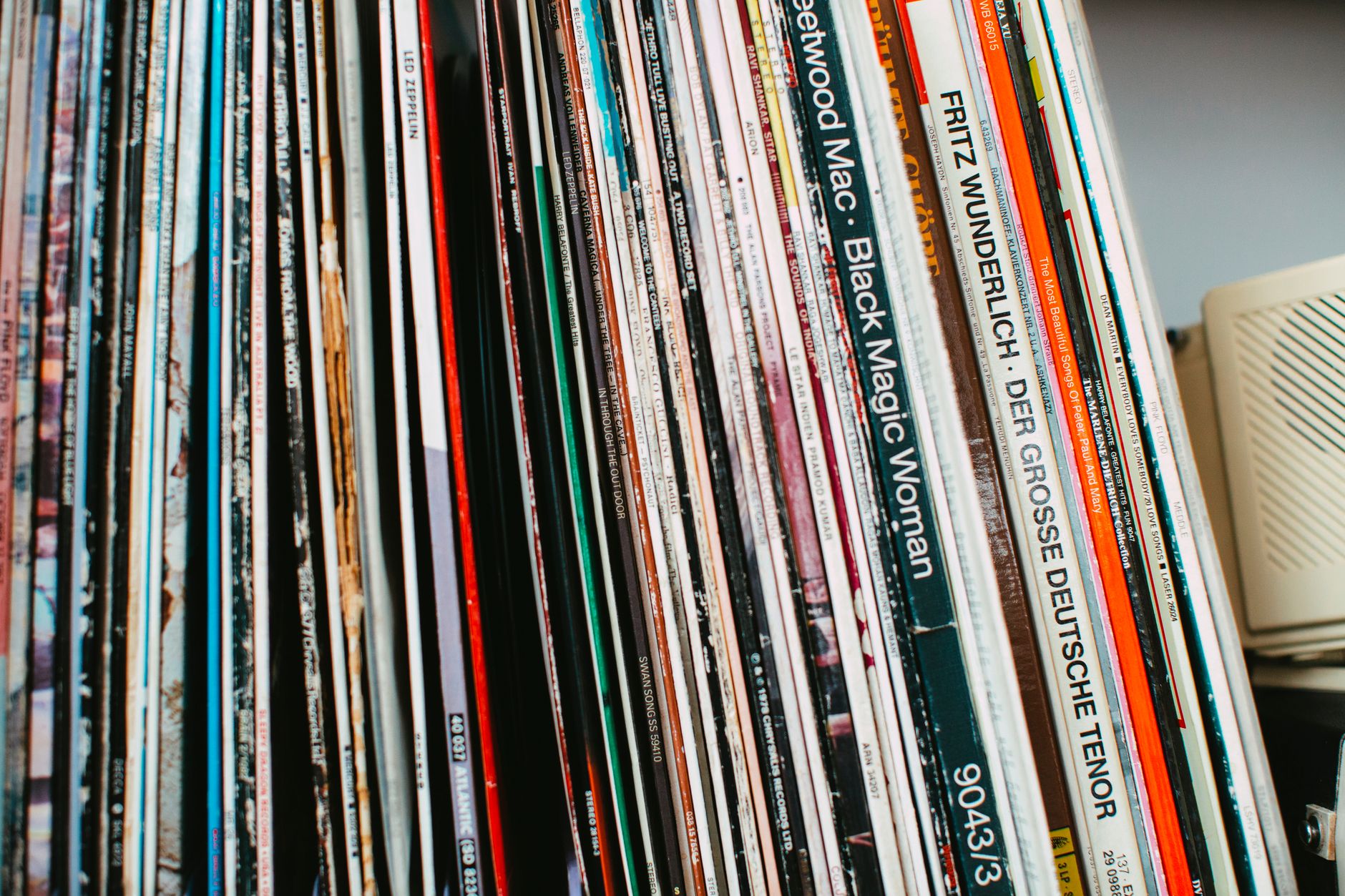
You do not need a crate of rare 12-inch singles to get the picture. Start with Homework and Discovery, then add Air’s Moon Safari for the downtempo side and Justice’s Cross for the second wave. Cassius’s 1999 is the next step for anyone who wants the club side in depth.
The singles are where the scene really lived, though, and many of them were never compiled on album. Searching for French house vinyl will turn up compilations and reissues of varying quality, so check the label and track list before you buy. And for the full Daft Punk catalog in buying order, see our collector’s guide to Daft Punk on vinyl.
Frequently asked questions
What is French touch?
A name for the wave of French electronic dance music that broke internationally in the late 1990s, centered on Paris. Its signature is house music built from filtered disco and funk samples, with a strong pop sensibility.
Is Daft Punk French touch?
Daft Punk are usually considered the scene’s best-known act, alongside Cassius, Air and Étienne de Crécy, though the duo’s sound kept evolving well beyond it.
What is the difference between French touch and French house?
The terms are often used interchangeably. French house usually refers to the filtered-disco club sound specifically, while French touch can also include downtempo acts such as Air.
Who produced 'Music Sounds Better With You'?
Stardust, a one-off trio of Thomas Bangalter, Alan Braxe and singer Benjamin Diamond. It was released in 1998 on Bangalter’s label Roulé.